

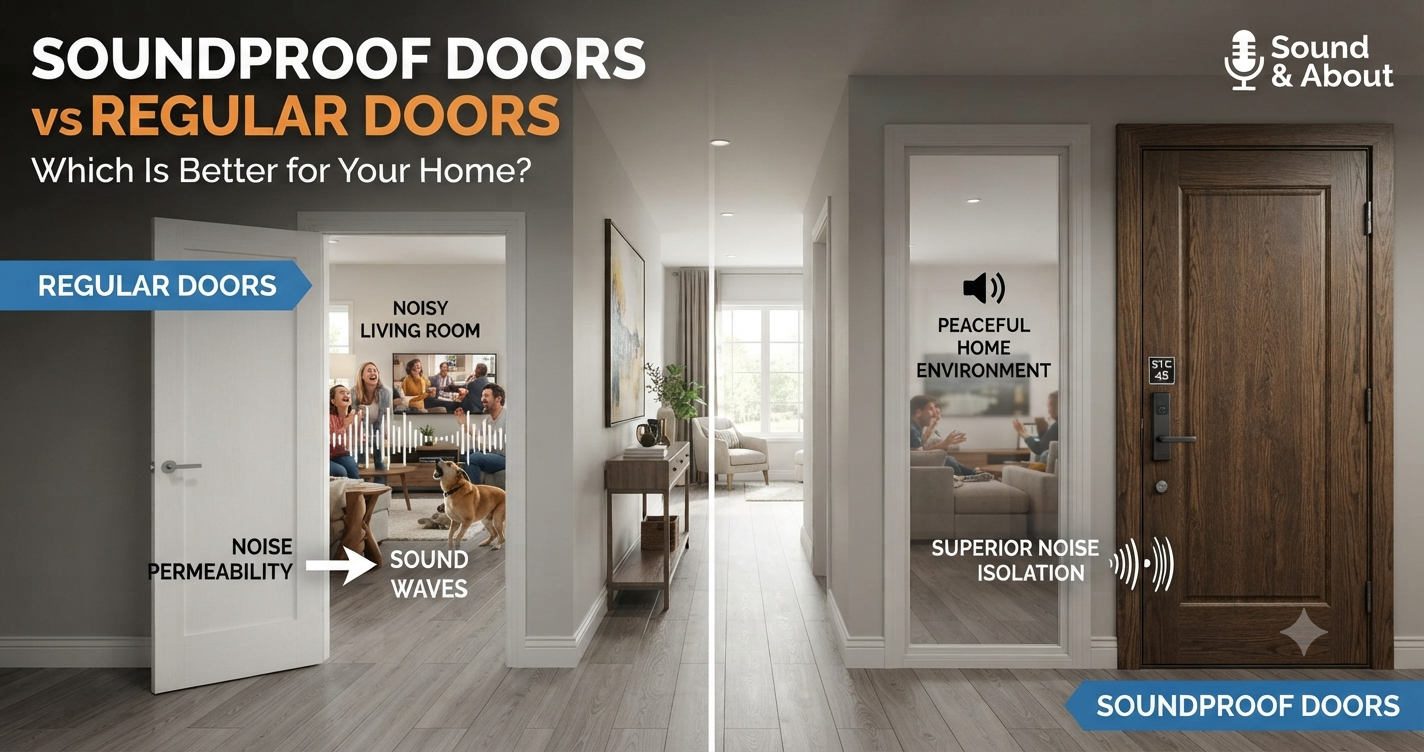
Discover how acoustic doors can improve privacy, reduce unwanted noise and create more comfortable living spaces in modern homes.
Soundproof doors, also known as acoustic doors, are specifically engineered to reduce sound transmission between spaces. Unlike conventional doors, which primarily provide privacy and separation, acoustic doors are designed with sound isolation in mind. For homeowners looking to minimise noise from corridors, kitchens, neighbouring spaces or home cinemas, soundproof doors can be a more suitable solution.
Why Does Your Choice of Door Matter?
A comfortable home is about more than attractive interiors and furniture. Noise management and privacy also play an important role in creating a peaceful living environment. In apartments and high-rise residences, sounds from elevator lobbies, common areas, kitchens and adjoining rooms can sometimes disturb everyday activities. A conventional door may provide basic separation, but it is not necessarily designed to control sound transmission. This is where soundproof doors for homes become relevant. Acoustic doors are developed to improve sound isolation and help homeowners create quieter, more private spaces.
- Soundproof Doors vs Regular Doors: Understanding the Difference : The biggest difference between acoustic doors and conventional doors is their intended performance.
- Regular doors are generally selected for accessibility, appearance, privacy and everyday functionality. Their sound-reduction performance depends on their construction, installation and sealing.
- Soundproof or acoustic doors are engineered specifically to limit sound transmission. Their construction and installation are designed around acoustic performance rather than appearance alone.
| Comparison | Regular Doors | Acoustic Doors |
| Primary purpose | Room separation and access | Sound isolation and privacy |
| Acoustic performance | Depends on construction and installation | Specifically engineered for acoustic performance |
| Noise management | May provide limited sound reduction | Designed to reduce sound transmission |
| Applications | General residential spaces | Bedrooms, entrances, kitchens and home cinemas |
| Testing | May not have acoustic performance testing | Can be supported by laboratory acoustic testing |
| Selection priority | Design, material and functionality | Acoustic performance, design and installation |
For homeowners who prioritise acoustic comfort, an appropriately specified acoustic door offers a more specialised solution.
- How Do Soundproof Doors Help Create a Quieter Home?
Acoustic doors are designed to address sound transmission through the doorway. Their effectiveness depends on the door construction, frame, seals, installation and the surrounding building elements. Here are some common residential applications.
-
- Bedrooms: Create a More Peaceful Sleeping Environment : Bedrooms should offer privacy and comfort. Acoustic doors can help reduce noise entering from corridors and adjoining living spaces, supporting a quieter sleeping environment.
- Main Entrances: Reduce Noise from Shared Spaces : In high-rise apartments, the main entrance connects private living areas with shared spaces such as elevator lobbies and corridors. Acoustic entrance doors can help create a more comfortable transition between these environments.
- Kitchens: Keep Cooking Activities Contained : Kitchens often involve appliances, conversations and everyday activity. Acoustic doors can help limit the transmission of these sounds into adjoining living and dining areas.
- Home Cinemas: Keep the Entertainment Experience Within the Room : A home cinema needs an appropriate acoustic environment. Acoustic doors can help contain entertainment sound within the room while reducing the disturbance experienced in adjoining spaces.
- What Makes an Acoustic Door Different?
An acoustic door is not simply a heavier version of a conventional door. Its performance depends on how the complete door assembly is engineered. Important considerations include:
- Door construction: The design and materials influence sound transmission.
- Sealing: Gaps around the door can allow sound to pass through.
- Frame integration: The frame must work effectively with the door.
- Installation quality: Incorrect installation can compromise acoustic performance.
- Laboratory testing: Tested acoustic performance provides a more reliable basis for comparing solutions.
It is important to remember that a door alone cannot make an entire room completely soundproof. Walls, ceilings, floors, ventilation openings and other building elements also influence the overall acoustic performance.
- Are Soundproof Doors Worth Installing in Modern Indian Homes?
For homeowners living in busy urban environments, acoustic privacy can be an important consideration. Traffic, shared corridors, household activities and entertainment systems can affect the comfort of different rooms. Investing in acoustic doors may be worth considering when:
- You want greater privacy in bedrooms.
- Your apartment is close to a busy elevator lobby.
- You want to reduce sound travelling between the kitchen and living area.
- You are designing a dedicated home cinema.
- Acoustic comfort is an important part of your residential design.
The right solution depends on the noise source, the intended application and the acoustic performance required.
- Why Choose Lab-Tested Acoustic Doors?
When comparing soundproof doors for homes, it is important to look beyond product descriptions and visual appearance. Laboratory-tested acoustic doors provide a more dependable way to understand their sound-isolation performance under specified testing conditions. Sound & About manufactures lab-tested acoustic doors through its specialised Sounds Silent division. The company has been working in acoustic engineering since 2006 and serves luxury residences, hotels, offices and professional spaces. Its experience in acoustic consulting and sound management also helps it approach doors as part of a larger acoustic environment rather than as standalone interior products. For homeowners considering premium acoustic solutions, this combination of acoustic knowledge and manufacturing expertise is an important consideration.
- How to Choose the Right Soundproof Door for Your Home
Before selecting an acoustic door, consider the following factors:
- Identify the noise source: Understand whether the noise comes from corridors, adjoining rooms, kitchens or entertainment spaces.
- Determine the application: A bedroom entrance may have different requirements from a home cinema door.
- Check acoustic performance: Ask for relevant laboratory test information and understand the performance being specified.
- Consider the complete assembly: Door, frame, seals and installation should be evaluated together.
- Consult acoustic specialists: Professional guidance can help identify a solution suited to your home’s requirements.
Choosing a door based only on appearance or thickness may not deliver the acoustic results you expect.
Frequently Asked Questions
- What is the difference between soundproof doors and regular doors?
Regular doors are primarily designed for room separation, access and privacy. Soundproof or acoustic doors are specifically engineered to reduce sound transmission and improve acoustic privacy.
- Are soundproof doors suitable for apartments?
Yes. Acoustic doors can be considered for apartment entrances, bedrooms, kitchens and other spaces where noise management and privacy are important.
- Which soundproof door is best for a bedroom?
The right bedroom acoustic door depends on the noise source, required sound isolation, door dimensions and installation conditions. A suitable solution should be selected based on the acoustic requirements of the room.
- Do acoustic doors completely block outside noise?
No door can guarantee complete silence in every situation. Acoustic doors are designed to reduce sound transmission, but the overall result also depends on walls, floors, ceilings, seals and installation quality.
- Are lab-tested acoustic doors better than regular doors?
Laboratory testing provides measurable information about acoustic performance under specified conditions. This makes it easier to evaluate an acoustic door against the requirements of a particular application.
- Where can acoustic doors be used in a home?
Common applications include main entrances, bedrooms, kitchens and home cinemas. The appropriate door depends on the purpose and acoustic requirements of each space.
Make Your Home More Comfortable with the Right Acoustic Door
The difference between a conventional door and an acoustic door goes beyond appearance. It is about understanding how sound travels and choosing a solution that supports privacy and comfort. If you are exploring soundproof doors for homes, consider solutions that combine acoustic engineering, tested performance and appropriate installation. Sound & About, through its Sounds Silent division, offers lab-tested acoustic door solutions for residential and professional environments. Explore acoustic door solutions: Sound & About
Leave a Reply