

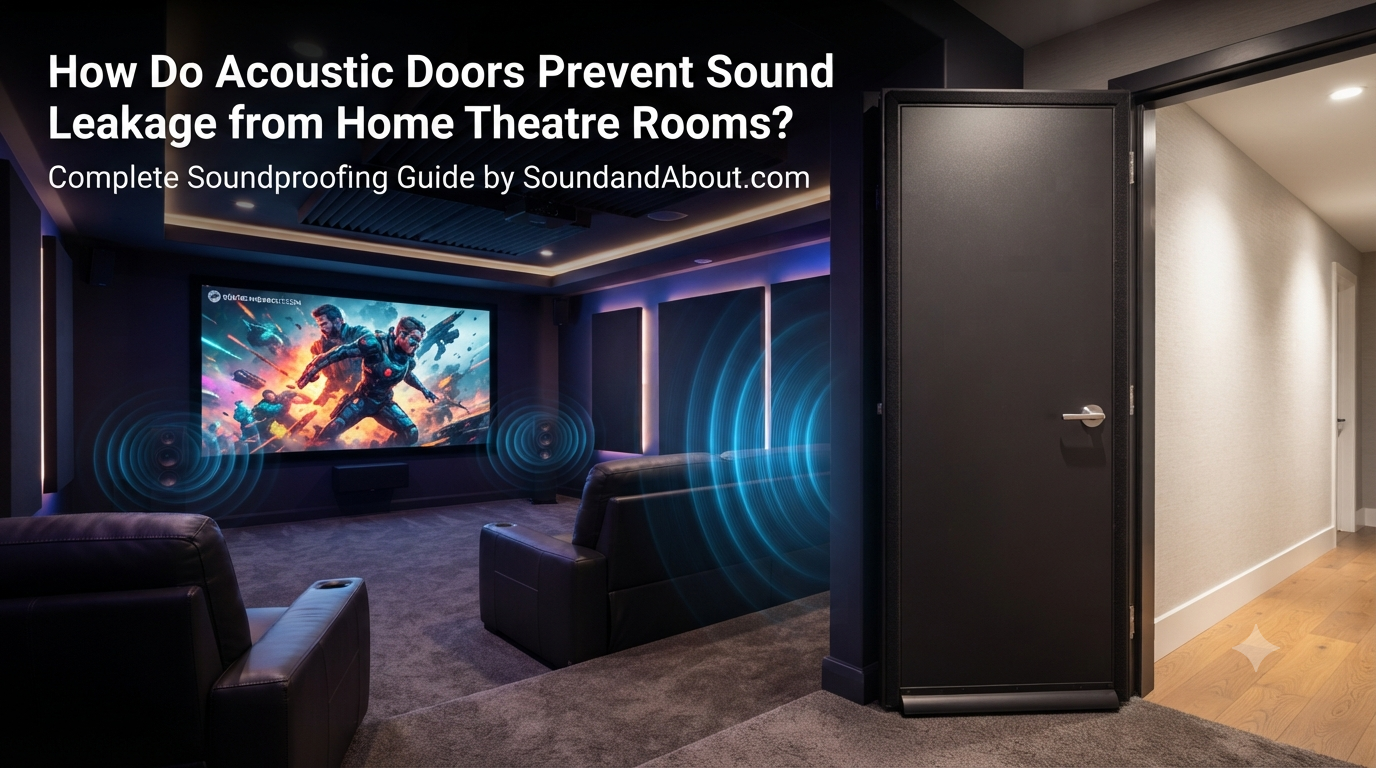
Imagine watching a blockbuster movie in your private home theatre. The surround sound is powerful, the bass is immersive, and every dialogue feels incredibly realistic. But as soon as the action begins, the sound starts travelling into adjoining bedrooms, living areas and other parts of your home. This is one of the most common challenges homeowners encounter when designing a dedicated entertainment space. While considerable attention is often given to speakers, acoustic panels and interior design, the door is frequently overlooked. An ordinary door can become a weak point in an otherwise well-designed soundproofing system, allowing unwanted sound to travel between rooms. This is where the Best Acoustic Doors for Home Theatre become essential. Professionally engineered acoustic doors are designed to reduce sound transmission through doorways using specialised construction, effective sealing systems and carefully designed frames. They help contain powerful home theatre audio while reducing the impact of external disturbances. For homeowners investing in premium entertainment spaces, understanding how acoustic doors work is an important step towards achieving better sound isolation and privacy.
What Are Acoustic Doors and Why Are They Important for Home Theatres?
Acoustic doors are specially engineered door systems designed to reduce the transmission of sound between adjoining spaces. Unlike conventional doors, which primarily serve security, privacy and aesthetic purposes, acoustic doors are developed with sound isolation as a key performance requirement. A home theatre produces different types of sound, ranging from dialogue and background music to powerful low-frequency effects generated by subwoofers. Without appropriate sound isolation, these frequencies can travel through doors, walls and other structural elements. Acoustic doors help address one of these important transmission paths: the doorway. Their importance in home theatres includes:
- Reducing sound leakage into adjoining rooms.
- Minimising external noise entering the cinema space.
- Improving acoustic privacy within the residence.
- Supporting a more controlled entertainment environment.
- Complementing the sound isolation performance of walls and ceilings.
A properly specified acoustic door can therefore contribute significantly to the overall performance of a residential home cinema.
How Do Acoustic Doors Prevent Sound Leakage from Home Theatre Rooms?
Acoustic doors prevent sound leakage through a combination of construction techniques and sealing mechanisms that reduce the amount of airborne sound passing through the door assembly. There are five important principles behind their performance.
- High-Density Construction Reduces Sound Transmission : The construction and mass of a door influence how effectively it can resist airborne sound transmission. Unlike lightweight hollow-core doors, professionally engineered acoustic doors are designed with specialised internal construction and materials that provide greater resistance to sound transmission. When sound waves strike the door surface, some energy is reflected, some is absorbed within the assembly, and some passes through to the other side. Appropriate door mass and construction help reduce the transmitted sound energy. This becomes particularly important in home theatres where powerful audio systems can generate substantial sound pressure levels.
- Acoustic Sealing Prevents Sound from Escaping Through Gaps : Even a heavy door may perform poorly if gaps exist around its edges. Sound can travel through small openings around the door, particularly along the sides, top and bottom. Professionally designed acoustic doors incorporate specialised sealing arrangements to minimise these transmission paths. Depending on the design, these may include:
- Perimeter compression seals.
- Acoustic gaskets.
- Automatic drop-down bottom seals.
- Properly sealed frame connections.
- Specialised threshold arrangements.
These components help create a more airtight closure when the door is shut. For home theatres, effective sealing is particularly important because even small gaps can compromise the performance of the overall sound isolation system
- Specialised Door Frames Support Acoustic Performance : The door shutter is only one part of an acoustic door system. The frame, hinges, closing mechanism, seals and installation details also influence how effectively the complete assembly performs. If the frame is poorly fitted or gaps remain between the frame and surrounding wall, sound may bypass the door itself. This is why professionally engineered acoustic doors must be considered as complete doorsets rather than standalone door panels. The objective is to ensure that the entire assembly works together to reduce sound transmission.
- Proper Installation Minimises Sound Leakage Paths : Even a professionally manufactured acoustic door may underperform if it is incorrectly installed. Common installation problems include:
- Improper alignment between the door and frame.
- Inadequate perimeter sealing.
- Gaps beneath the door.
- Poorly sealed frame-to-wall connections.
- Incorrectly adjusted closing hardware.
Professional installation ensures that the acoustic components function as intended. This is particularly important in luxury home theatres, where the acoustic door must complement the performance of the surrounding wall and ceiling assemblies.
- Acoustic Doors Help Maintain the Integrity of the Sound Isolation System : A home theatre’s soundproofing performance depends on its weakest transmission path. Even if the walls and ceiling are professionally designed, an inadequately sealed doorway can compromise the overall result. Acoustic doors help address this weak point by providing a specialised sound-isolating entrance. They should therefore be selected as part of the complete acoustic design rather than treated as an independent interior furnishing decision.
What Features Should You Look for in the Best Acoustic Doors for Home Theatre?
Choosing an acoustic door involves more than selecting a particular material or appearance. Homeowners should evaluate the technical specifications and performance of the complete door assembly. Here are six important factors to consider.
- Independently Tested Acoustic Performance : Look for acoustic performance data supported by appropriate laboratory testing. Testing standards such as ASTM E90 are used to measure airborne sound transmission loss through building partitions and assemblies. Independent test reports provide a more reliable basis for evaluating acoustic performance than general marketing claims.
- Sound Transmission Class (STC) Rating : STC stands for Sound Transmission Class. It is a rating used to describe the ability of a building element to reduce airborne sound transmission. A higher STC rating generally indicates better sound isolation within the scope of the test. When comparing acoustic doors, homeowners should check whether the rating applies to the complete door, frame and sealing assembly.
- Effective Perimeter and Bottom Seals : The sealing system is one of the most important components of an acoustic door. Check whether the door incorporates suitable perimeter gaskets and a bottom sealing arrangement that minimises gaps when closed.
- Frame and Hardware Quality : The frame must be compatible with the door’s weight and acoustic performance requirements. Appropriate hinges, locking systems and closing mechanisms help maintain alignment and consistent sealing.
- Customisation and Interior Compatibility : Premium home theatres are often designed around specific interior themes. Acoustic doors should complement the room’s materials, colours and architectural details while maintaining their intended acoustic performance.
- Professional Installation Support : A manufacturer or acoustic specialist should be able to provide guidance regarding specifications, installation requirements and compatibility with the surrounding construction. The performance of the complete installation matters more than the specifications of an individual component.
Acoustic Doors vs Regular Doors: What Is the Difference?
Understanding the differences between conventional doors and acoustic doors can help homeowners make informed decisions.
| Comparison Parameter | Regular Doors | Acoustic Doors |
| Primary Purpose | Privacy, security and aesthetics | Sound transmission reduction |
| Construction | Conventional hollow-core or solid-core construction | Specialised acoustic construction |
| Sealing | Standard door gaps and fittings | Designed acoustic sealing arrangements |
| Frame Requirements | Conventional door frame | Frame designed for acoustic performance |
| Acoustic Testing | Generally not supplied with acoustic test ratings | May be supported by independent acoustic test reports |
| Home Theatre Suitability | Limited for demanding sound isolation requirements | Designed for specialised acoustic applications |
The most important difference is that an acoustic door is designed and evaluated as part of a sound isolation system. Simply installing a heavier conventional door does not guarantee the same acoustic performance.
Can Acoustic Doors Completely Stop Home Theatre Sound Leakage?
Acoustic doors can significantly reduce sound transmission through doorways, but they cannot independently guarantee a completely soundproof home theatre. Sound can travel through multiple pathways, including:
- Walls and adjoining partitions.
- Ceilings and floors.
- Windows and glazing.
- Ventilation ducts.
- Electrical openings and service penetrations.
- Structural connections.
Low-frequency bass can be particularly challenging because vibrations may travel through the building structure. Therefore, effective home theatre sound isolation requires a coordinated approach involving acoustic doors, wall construction, ceiling treatments, floor isolation and appropriate sealing. The acoustic door should be selected according to the sound isolation target established for the entire room.
Why Choose Sound And About for Professionally Engineered Acoustic Doors?
When designing a premium home theatre, selecting an acoustic door manufacturer with a strong understanding of sound behaviour is essential. Sound And About has been involved in acoustic engineering in India since 2006. Its journey from acoustic consultancy to specialised acoustic door manufacturing led to the development of Sounds Silent, its dedicated acoustic door division.
The company’s approach goes beyond manufacturing conventional doors. Its focus is on creating lab-tested acoustic door solutions that complement the wider acoustic requirements of specialised environments. Its applications include luxury residences, home cinemas, recording studios, auditoriums, conference rooms and other spaces where sound isolation is important. For home theatre projects, this expertise is relevant because the door must work in coordination with the surrounding acoustic construction. By combining specialised manufacturing, acoustic engineering knowledge and attention to design, Sound And About aims to provide solutions that support both acoustic performance and residential aesthetics. Explore Sound And About to learn more about its lab-tested acoustic doors and residential acoustic applications.
Frequently Asked Questions About the Best Acoustic Doors for Home Theatre
- What are the best acoustic doors for home theatre rooms?
The best acoustic doors are those that provide independently tested sound isolation performance and incorporate suitable door construction, frames, perimeter seals and bottom sealing arrangements. The ideal specification depends on the room’s sound isolation requirements and surrounding construction.
- How do acoustic doors prevent sound from escaping a home theatre?
Acoustic doors reduce sound transmission through specialised construction and sealing systems. Their mass helps resist sound transmission, while perimeter gaskets and bottom seals minimise gaps through which airborne sound could escape.
- What is the ideal STC rating for a home theatre acoustic door?
There is no universal STC rating suitable for every home theatre. The required rating depends on speaker output, adjoining room usage, wall construction and the desired level of sound isolation. Homeowners should consult an acoustic specialist and evaluate independently tested doorset performance.
- Are acoustic doors better than regular wooden doors for home theatres?
Acoustic doors are specifically engineered for sound isolation, whereas conventional wooden doors are generally designed for everyday residential requirements. A properly tested acoustic doorset with suitable sealing can provide more reliable sound isolation than an ordinary wooden door.
- Can acoustic doors block bass from home theatre speakers?
Acoustic doors can help reduce low-frequency sound transmission, but bass is difficult to isolate because it can travel through both air and building structures. Effective control may require specialised door assemblies alongside structural isolation and other acoustic measures.
- Why is professional installation important for acoustic doors?
Professional installation helps ensure proper door alignment, effective sealing and correct frame integration. Poor installation can create gaps that allow sound to bypass the acoustic door, reducing its overall effectiveness.
A premium home theatre should deliver an immersive cinematic experience without disturbing the rest of the residence. While speakers, screens and interior design contribute to the entertainment experience, sound isolation determines how effectively the space functions within the home. The Best Acoustic Doors for Home Theatre are designed to address one of the most overlooked sound transmission pathways: the doorway. Through specialised construction, acoustic sealing, appropriate frames and professional installation, these doors help reduce sound leakage and improve acoustic privacy. However, the best results come from integrating acoustic doors into a comprehensive sound isolation strategy. With its experience in acoustic engineering and specialised lab-tested acoustic door manufacturing, Sound And About brings valuable expertise to residential acoustic applications.
Because a truly immersive home theatre should let you enjoy every sound on screen without making the rest of your home listen along.
Leave a Reply