

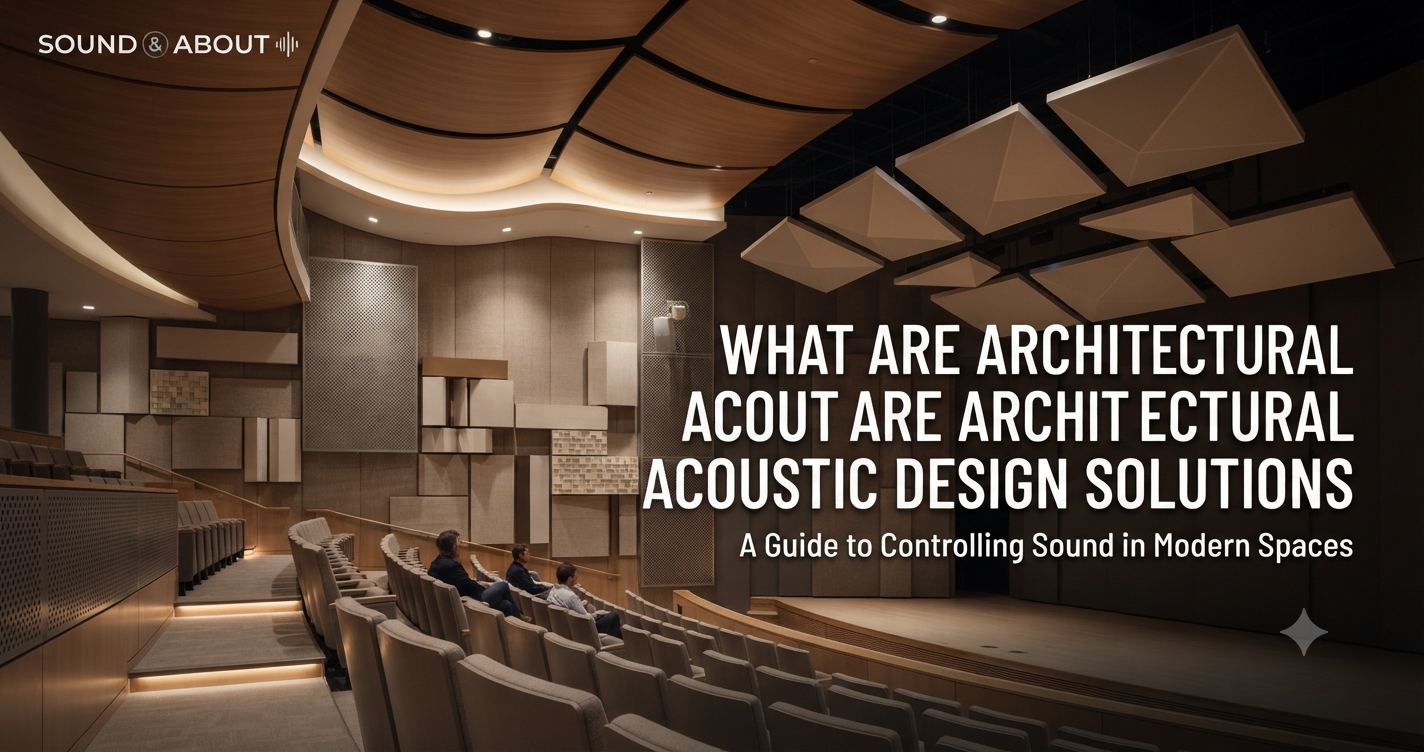
Modern architecture is no longer defined by appearance alone. While aesthetics, functionality and structural design remain essential, the way a building sounds has become equally important. From luxury residences and corporate offices to hotels, recording studios and auditoriums, sound directly influences how people experience an indoor environment. Imagine living in a beautifully designed apartment where traffic noise interrupts your sleep. Consider a corporate conference room where conversations can be overheard outside, or a home cinema where sound escapes into adjoining rooms. These problems can affect privacy, comfort, productivity and the overall experience of a building. This is where Architectural Acoustic Design Solutions become important. Architectural acoustics focuses on understanding and managing sound within built environments. It involves planning spaces, selecting appropriate construction materials, controlling sound transmission and considering how sound behaves within individual rooms. The objective is to create buildings where sound supports the intended purpose of each space rather than becoming a source of disturbance. For modern buildings, acoustic planning is not simply an additional feature. It is an important consideration in creating comfortable, functional and well-designed environments.
What Are Architectural Acoustic Design Solutions?
Architectural Acoustic Design Solutions are specialised approaches used to manage sound within buildings. They focus on controlling noise transmission, improving sound quality, reducing unwanted disturbances and maintaining acoustic privacy between different spaces. These solutions consider how sound travels through walls, floors, ceilings, doors, openings and other structural elements. They also examine how sound reflects within a room and how its characteristics influence speech clarity, music reproduction and everyday activities. Depending on the building’s purpose, architectural acoustic design may involve:
- Sound insulation between adjoining rooms.
- Acoustic doors for improved sound separation.
- Noise control in residential and commercial spaces.
- Acoustic treatment to manage sound reflections.
- Planning spaces according to their acoustic requirements.
- Reducing noise transmission through building openings.
- Designing environments that support speech privacy and focused activities.
An important distinction is that soundproofing and acoustic treatment are not the same thing. Sound insulation aims to reduce sound travelling from one space to another, while acoustic treatment manages sound reflections and reverberation within a room. A well-planned acoustic environment considers both requirements wherever necessary.
Why Do Modern Buildings Need Architectural Acoustic Design?
Urban development, high-density construction, changing lifestyles and increasingly specialised indoor environments have made acoustic performance more important than ever. Buildings today serve multiple purposes. A residential apartment may include a home office, entertainment room and private bedroom. A commercial building may contain conference rooms, executive cabins, collaborative workspaces and common areas. Each space has different acoustic requirements. Here are some important reasons why architectural acoustics deserves attention during building design.
-
- Better Noise Control in Urban Environments : Modern cities are filled with traffic, construction activity, public movement and neighbouring residential or commercial operations. These sounds can travel into buildings through windows, doors, walls and other openings. Without appropriate acoustic planning, external noise can disturb indoor activities. Architectural acoustic design solutions help identify potential sound transmission paths and determine suitable measures to reduce unwanted noise. Depending on the building, these measures may include appropriate construction assemblies, properly designed openings and specialised acoustic doors. For residential buildings, this can help create quieter bedrooms, living spaces and private areas.
- Improved Privacy in Residential Spaces : Privacy is an important part of comfortable residential living. Conversations, television sounds, kitchen activities and other household noises can travel between adjoining rooms or into shared spaces. Bedrooms, home offices, entertainment rooms and private living areas may require different levels of sound separation. Acoustic doors are particularly relevant where sound transmission through door openings is a concern. A properly specified and installed acoustic doorset can contribute to reducing sound leakage between spaces. For example, an acoustic door between a home cinema and the rest of a residence can help contain entertainment audio, while an acoustic door for a bedroom can support a quieter and more private environment.
- Greater Productivity in Commercial Buildings : Noise can affect concentration, communication and workplace productivity. In offices, common sources of disturbance include conversations, meeting-room discussions, telephone calls, equipment and movement in shared areas. Different workplace environments require different acoustic considerations:
- Executive cabins: Support confidential discussions and focused work.
- Conference rooms: Help maintain speech privacy during meetings.
- Meeting spaces: Reduce unwanted sound transmission into adjoining areas.
- Collaborative workspaces: Require suitable acoustic planning to manage conversations and background noise.
Acoustic doors can play an important role in spaces where privacy between rooms is essential. However, overall acoustic performance depends on the complete building assembly, including walls, ceilings, floors, doors, seals and installation quality.
- Enhanced Hospitality Experiences : Hotels, resorts and premium hospitality properties are designed to offer comfort, privacy and a relaxing experience. Noise from corridors, neighbouring rooms, service areas and common spaces can affect guest satisfaction. Architectural acoustic design helps hospitality developers consider sound separation between guest rooms, banquet halls, conference facilities and other functional areas. Some important applications include:
- Guest-room entrance doors.
- Connecting doors between hotel suites.
- Conference and meeting rooms.
- Banquet halls.
- Private dining spaces.
- Entertainment and cinema areas.
Acoustic doors can help reduce sound transmission through these openings when selected and installed as part of an appropriate acoustic design. For hotels, acoustic comfort is not just a technical consideration. It contributes to the overall quality of the guest experience.
- Better Sound Experiences in Entertainment Spaces : Spaces designed for music, cinema and performances have specific acoustic requirements. A recording studio needs an environment where external noise does not interfere with recording sessions. A home cinema requires suitable sound isolation to prevent powerful audio from disturbing other parts of the residence. An auditorium needs appropriate acoustic planning to support speech and performance experiences. These spaces may require a combination of:
- Sound isolation.
- Internal acoustic treatment.
- Control of reverberation.
- Appropriate room geometry.
- Noise management.
- Specialised acoustic doors and openings.
The exact requirements depend on the intended use, room dimensions, equipment and surrounding environment.
What Are the Key Components of Architectural Acoustic Design?
Effective architectural acoustic design is not achieved through a single product or material. It requires understanding the building as a complete acoustic environment. The following components are particularly important.
- Sound Insulation : Sound insulation focuses on reducing the amount of sound transmitted between spaces. Walls, floors, ceilings, windows and doors all contribute to the sound separation of a building. Their performance depends on factors such as construction, mass, airtightness, junction details and installation. An acoustic design assessment helps identify where sound may travel and which building elements require attention
- Acoustic Doors and Door Systems : Doors are an important consideration in acoustic design because door openings can become weak points in an otherwise well-insulated room. A specialised acoustic door is designed to help reduce sound transmission through the doorway. Its performance depends on more than the door shutter alone. Important elements include:
- Door shutter construction.
- Frame design.
- Perimeter sealing.
- Bottom sealing or threshold arrangement.
- Hardware and closing mechanisms.
- Installation quality.
Even a specialised door may not deliver its intended performance if gaps remain around the frame or beneath the door. This is why acoustic doors should be selected as complete doorsets and considered alongside the acoustic requirements of the surrounding walls and other building elements.
- Internal Acoustic Treatment : Sound can reflect from hard surfaces such as concrete, glass, tiles and plastered walls. Excessive reflections may create unwanted reverberation and affect speech clarity. Internal acoustic treatment is used to manage these reflections. Depending on the space, treatment may include acoustic wall panels, ceiling systems, absorptive surfaces and other purpose-specific materials. This is particularly relevant in conference rooms, auditoriums, recording studios and entertainment spaces. It is important to remember that acoustic treatment improves the sound environment inside a room; it does not automatically prevent sound from travelling into neighbouring spaces.
- Building Layout and Space Planning : Acoustic performance can be influenced by how rooms are positioned within a building. For example, placing a recording studio next to a noisy service area may create challenges that could have been reduced through better planning. Similarly, bedrooms, conference rooms and other spaces requiring privacy should be considered in relation to corridors, common areas and noise-generating activities. Addressing these considerations during the architectural design stage can help reduce the need for corrective work later.
- Sealing and Installation Details : Small gaps and poorly executed junctions can affect sound isolation. This is particularly important around doors, frames, service penetrations and other openings. For acoustic doors, correct alignment, perimeter seals, bottom seals and installation details are essential considerations. Acoustic design must therefore account for workmanship and installation quality, not just product specifications.
How Do Acoustic Doors Contribute to Architectural Acoustic Design?
Acoustic doors are one of the specialised elements used in architectural acoustic design. They help address sound transmission through door openings, which can otherwise compromise the acoustic separation between two spaces. For example, a conference room may have acoustically designed walls, but an unsuitable door can become a weak point in the overall arrangement. Similarly, a home cinema may have appropriate sound-isolating construction, but sound can still escape through gaps around its entrance door. A properly selected acoustic doorset helps address this specific challenge. Sound And About has been involved in acoustic engineering in India since 2006. Its journey from acoustic consultancy to specialised acoustic door manufacturing has informed the development of its Sounds Silent door division. The company’s approach reflects an understanding that acoustic doors must work as part of the larger acoustic environment rather than being treated as standalone decorative products. Its acoustic door applications include residential entrances, bedrooms, kitchens, executive cabins, conference rooms, recording studios, home cinemas, movie halls, auditoriums, banquet halls and hotel guest rooms. For projects with specific acoustic requirements, door selection should be guided by the intended application and relevant product test information.
Where Are Architectural Acoustic Design Solutions Used?
Architectural acoustic design is relevant across several building categories.
| Building Type | Common Acoustic Requirements | Relevant Solutions |
| Luxury Residences | Bedroom privacy, home cinema sound isolation and reduced household noise | Acoustic doors and suitable sound-isolating construction |
| Corporate Offices | Confidential meetings, executive privacy and reduced sound disturbance | Acoustic doors and building acoustic planning |
| Hotels | Guest privacy, corridor noise management and suite separation | Acoustic guest-room and connecting door systems |
| Recording Studios | Reduced external noise and controlled internal sound | Acoustic doors, sound isolation and room treatment |
| Home Cinemas | Containing entertainment audio and limiting external disturbance | Acoustic doors and integrated sound-isolating construction |
| Auditoriums | Performance sound quality and separation from surrounding areas | Acoustic planning, internal treatment and suitable doors |
| Educational Institutions | Music-room separation and reduced disturbance between learning spaces | Acoustic doors and application-specific acoustic design |
| Banquet Halls | Managing sound between event spaces and surrounding areas | Acoustic doors and appropriate building assemblies |
The right solution depends on the building’s purpose, surrounding noise conditions, construction and required acoustic performance.
What Should Architects and Developers Consider Before Choosing Acoustic Solutions?
Acoustic planning is most effective when it begins early in the building design process. Architects, interior designers and developers should consider the following factors before specifying acoustic products or systems.
- Identify the Purpose of Each Space : A bedroom, recording studio, conference room and auditorium do not have identical acoustic requirements. The intended use of each room should guide the design approach.
- Understand the Source of Noise : Determine whether the main concern is external traffic, neighbouring rooms, machinery, conversations or entertainment audio. Different sources may require different solutions.
- Identify Sound Transmission Paths : Sound can travel through walls, floors, ceilings, doors, windows and structural connections. Treating only one element may not solve the overall problem.
- Evaluate Acoustic Door Requirements : Where a doorway is a potential weak point, consider an acoustic doorset designed for the intended application. Review relevant laboratory test reports and installation requirements rather than relying on generic performance claims.
- Consider the Complete Building Assembly : Acoustic doors, walls, ceilings, floors and openings should work together. The performance of the weakest element can influence the overall sound isolation of a space.
- Prioritise Professional Acoustic Guidance : For projects with demanding acoustic requirements, consult experienced acoustic professionals during the planning and specification stages.
Why Choose Sound And About for Specialised Acoustic Door Solutions?
Sound And About brings experience in acoustic engineering and specialised acoustic door manufacturing, with a presence in the Indian market since 2006. Its background in acoustic consultancy provides an understanding of how sound behaves in different built environments and why door systems matter in achieving effective sound separation. Through its specialised Sounds Silent division, the company manufactures lab-tested acoustic doors for residential, hospitality, corporate and professional applications. Its solutions are relevant to spaces such as:
- Luxury residential properties.
- Bedrooms and private living areas.
- Home cinemas.
- Executive cabins and conference rooms.
- Hotels and guest rooms.
- Recording studios.
- Movie halls and auditoriums.
- Banquet halls and music rooms.
The key consideration is that an acoustic door should be selected according to the requirements of the space and integrated correctly with the surrounding construction. Explore the acoustic door applications and solutions offered by Sound And About to understand how specialised door systems can contribute to better sound management in modern buildings.
Frequently Asked Questions About Architectural Acoustic Design Solutions
- What are architectural acoustic design solutions?
Architectural acoustic design solutions are methods and systems used to manage sound within buildings. They help reduce unwanted noise transmission, improve acoustic comfort, support speech privacy and manage sound reflections within indoor spaces.
- Why are architectural acoustic solutions important in modern buildings?
They help improve privacy, comfort, concentration and the overall indoor experience. They are particularly important in urban residences, offices, hotels, conference rooms, recording studios and entertainment spaces where noise control is a key requirement.
- What is the difference between soundproofing and acoustic treatment?
Soundproofing or sound isolation focuses on reducing sound transmission between spaces. Acoustic treatment manages sound reflections and reverberation within a room. Both serve different purposes and may be required together depending on the application.
- How do acoustic doors help in building acoustics?
Acoustic doors are designed to reduce sound transmission through door openings. Their effectiveness depends on the door shutter, frame, seals, threshold arrangement and installation quality. They should be considered as part of the complete acoustic design.
- Where are acoustic doors commonly used?
Acoustic doors are commonly used in bedrooms, home cinemas, recording studios, conference rooms, executive cabins, hotels, guest rooms, auditoriums, movie halls and banquet halls.
- Can acoustic doors completely soundproof a room?
An acoustic door alone cannot guarantee that an entire room will be soundproof. Sound may also travel through walls, ceilings, floors, windows and other openings. Effective sound isolation requires the complete room construction to be considered.
- When should acoustic design be considered in a building project?
Acoustic requirements should ideally be considered during the architectural planning and design stages. Early planning makes it easier to identify potential noise issues, coordinate building elements and specify suitable acoustic products before construction is completed.
- How can I choose the right acoustic door for my project?
Start by identifying the room’s purpose, the type of noise to be controlled and the required sound isolation. Review the product’s laboratory test information, doorset construction, sealing arrangements and installation requirements. Consult an acoustic specialist when the project has specific performance targets.
Modern buildings must do more than look impressive. They must also provide environments where people can work, rest, communicate and enjoy their surroundings without unnecessary noise disturbance. Architectural Acoustic Design Solutions help achieve this by considering how sound travels through buildings and how different spaces should perform acoustically. From sound isolation and room treatment to specialised acoustic doors, every component has a role in creating a comfortable indoor environment. For architects, developers, interior designers and property owners, the key is to consider acoustics as part of the overall building design rather than treating it as a last-minute addition. With its experience in acoustic engineering and specialised acoustic door manufacturing, Sound And About brings an application-focused understanding of sound management to residential, commercial and professional spaces.
Explore Sound And About’s acoustic door solutions to discover how the right door system can contribute to better acoustic performance in modern buildings.
Leave a Reply