

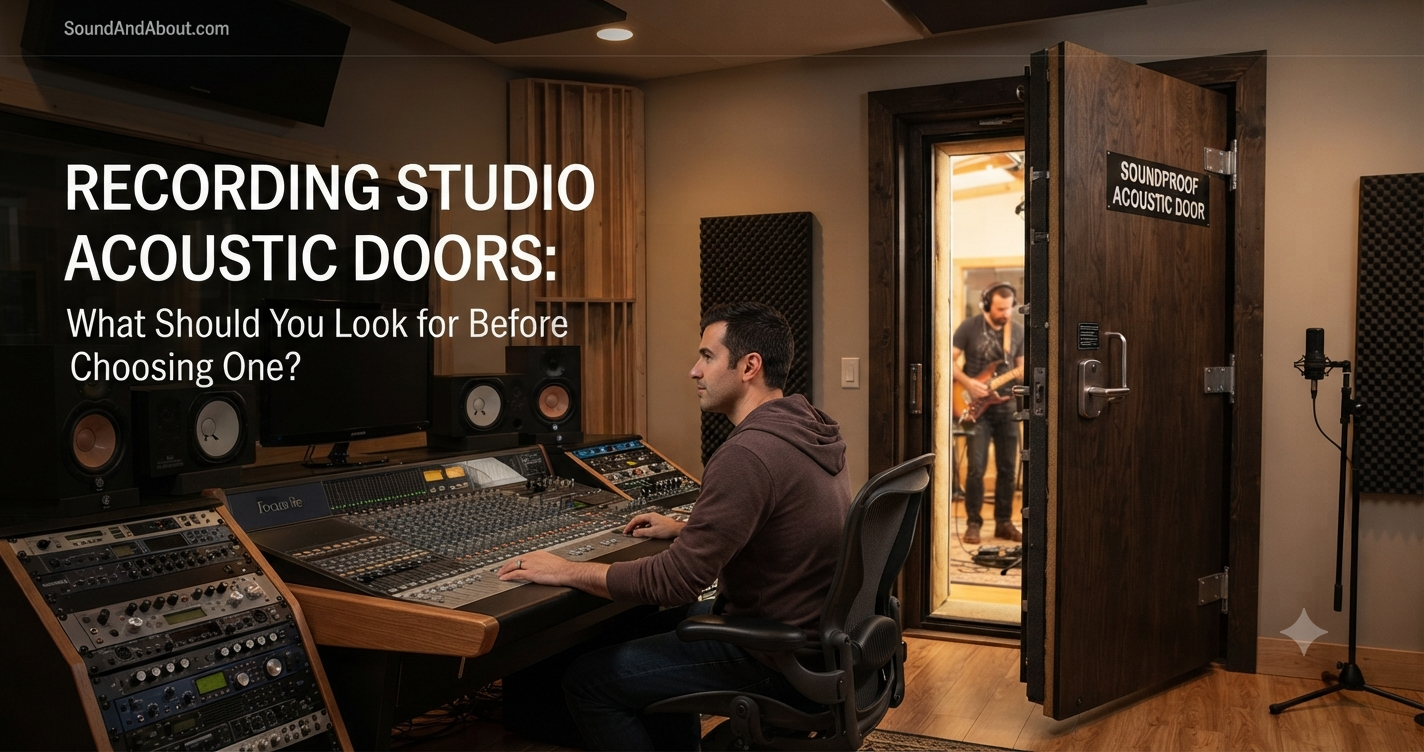
An essential guide to choosing the right acoustic doors for professional recording studios, music production spaces and sound-sensitive environments.
When choosing acoustic doors for recording studios, look beyond appearance and conventional door specifications. Consider acoustic performance, laboratory testing, door construction, sealing, frame integration and installation quality. A properly specified acoustic door helps reduce external noise entering the studio and supports the controlled acoustic environment required for professional recording.
Why Are Acoustic Doors Important for Recording Studios?
A professional recording studio requires a controlled environment where unwanted external sounds do not interfere with recording sessions. Traffic, conversations, corridor activity and noise from adjoining spaces can affect the recording process. While acoustic walls, ceilings and flooring contribute to sound isolation, doors are equally important because they form part of the overall acoustic enclosure. A conventional door may provide privacy and physical separation, but it may not offer the sound-isolation performance required in a professional recording environment. This is why Acoustic Doors for Recording Studios are an important consideration when designing or upgrading a studio. Sound & About, through its specialised Sounds Silent division, manufactures lab-tested acoustic doors designed for professional and specialised environments, including recording studios.
- Check the Acoustic Performance Before Choosing a Door : The first consideration should be the acoustic performance of the door. An acoustic door should be selected according to the sound-isolation requirements of the recording space. Different studios may have different requirements depending on their location, surrounding noise levels and intended use. Before making a decision, consider:
- Whether the door has relevant laboratory acoustic test results.
- The sound-isolation performance specified for the product.
- Whether the performance suits the studio’s acoustic requirements.
- Whether the complete door assembly has been evaluated.
Laboratory testing provides measurable information about acoustic performance under specified conditions. It is therefore more useful than choosing a door based only on its appearance, thickness or weight.
- Pay Attention to Door Sealing and Frame Integration : Even a well-engineered acoustic door can underperform if sound escapes through gaps around its edges. The door leaf, frame, seals and surrounding construction must work together as part of the acoustic enclosure. Important considerations include:
- Perimeter sealing: Gaps around the door can create pathways for sound transmission.
- Frame integration: The frame must be compatible with the acoustic door system and the surrounding wall construction.
- Installation quality: Incorrect fitting or inadequate sealing can compromise the intended acoustic performance.
For recording studios, it is important to evaluate the complete door assembly rather than treating the door leaf as an isolated product.
- Choose a Door That Matches Your Studio Requirements : Not every recording environment has the same acoustic requirements. A vocal recording room, music production studio and instrument recording space may have different operational needs. Consider the intended application before selecting a door.
- Vocal Recording Rooms : Vocal recording spaces require a controlled environment where external noise can interfere with sensitive microphone recordings. An appropriately specified acoustic door can help reduce unwanted sound entering the room.
- Instrument Recording Rooms : Musical instruments can produce a wide range of sound levels and frequencies. Acoustic doors can form an important part of the sound-isolation strategy between recording rooms and surrounding spaces.
- Music Production Studios : Production studios often contain multiple work areas and equipment. Properly selected acoustic doors can help manage sound transmission between adjoining spaces.
- Studio Control Rooms : Control rooms are used for monitoring, mixing and production decisions. Acoustic door selection should complement the overall acoustic design of the room.
- Consider the Complete Acoustic Design of Your Studio : One common mistake when planning a recording studio is focusing entirely on acoustic doors without evaluating the rest of the building structure. Sound can travel through:
- Walls and partitions.
- Ceilings and floors.
- Ventilation and service openings.
- Windows and glazing.
- Gaps around doors and other building elements.
Installing an acoustic door alone cannot guarantee complete sound isolation if other parts of the enclosure allow sound to pass through. The door should therefore be selected as part of a coordinated acoustic design. This is where professional acoustic consulting becomes valuable. It helps identify potential sound transmission paths and ensures that the selected door complements the overall studio requirements.
- Why Lab-Tested Acoustic Doors Matter : When comparing acoustic doors, verified performance is an important consideration. Lab-tested acoustic doors provide documented performance information under specified test conditions. This allows architects, acoustic consultants and studio owners to make more informed decisions. Sound & About has been working in acoustic engineering since 2006. Its journey from acoustic consulting to manufacturing led to the creation of Sounds Silent, its specialised acoustic door division. The company’s experience in designing acoustic environments, including recording studios and conference rooms, informs its approach to acoustic door manufacturing. Its manufacturing expertise and understanding of sound behaviour help ensure that its doors are considered as part of the wider acoustic environment. For professional recording studio projects, this combination of acoustic knowledge and product engineering is particularly relevant.
- What Should You Ask Before Buying Acoustic Doors for Recording Studios?
Before finalising your purchase, discuss the following points with the manufacturer or acoustic consultant:
- What is the tested acoustic performance? Request relevant laboratory test documentation.
- Is the door suitable for my studio application? Explain the purpose and acoustic requirements of the space.
- How are the frame and seals designed? Understand how the complete assembly manages sound transmission.
- What installation requirements should be followed? Confirm that the installation process supports the specified performance.
- Will the door integrate with the existing acoustic design? Consider the walls, ceiling, flooring and other building elements.
- Can the manufacturer provide technical guidance? Specialist advice can help avoid unsuitable product selection.
These questions help you evaluate acoustic doors based on performance and suitability rather than appearance alone.
- Why Consider Sound & About for Recording Studio Acoustic Doors?
Selecting an acoustic door requires an understanding of how sound behaves within a built environment. Sound & About brings experience in acoustic consulting, engineering and manufacturing. Since 2006, the company has worked on acoustic environments and developed its Sounds Silent division to manufacture specialised lab-tested acoustic doors. Its recording studio application focuses on reducing external noise and supporting the controlled acoustic environment required for recording sessions. With a pan-India presence and a network of acoustic specialists, Sound & About serves projects across professional and specialised environments. For recording studio owners, architects and acoustic consultants, this experience offers a relevant starting point when evaluating acoustic door requirements.
Frequently Asked Questions
- What are acoustic doors for recording studios?
Acoustic doors are specially engineered doors designed to reduce sound transmission. In recording studios, they help limit external noise entering the recording environment and support overall sound isolation.
- Why do recording studios need specialised acoustic doors?
Recording studios work with sensitive microphones and audio equipment. External noise can interfere with recordings, making acoustic doors an important part of the studio’s overall sound-isolation design.
- What should I check before buying a recording studio acoustic door?
Check laboratory test results, acoustic performance, door construction, perimeter sealing, frame compatibility and installation requirements. The door should also match the acoustic specifications of the studio.
- Are acoustic doors better than regular doors for recording studios?
Acoustic doors are specifically engineered for sound isolation, whereas regular doors are generally designed for access, separation and everyday functionality. For professional recording environments, an appropriately specified acoustic door is generally more suitable.
- Do acoustic doors completely block outside noise?
No door can guarantee complete silence in every environment. Overall sound isolation depends on the door assembly, walls, ceilings, floors, ventilation openings and installation quality.
- Are lab-tested acoustic doors important for professional studios?
Yes. Laboratory testing provides measurable information about acoustic performance under specified conditions. This helps studio owners and acoustic consultants evaluate whether a door is suitable for their requirements.
- Can acoustic doors be installed in existing recording studios?
Acoustic doors may be considered for existing studios, subject to site conditions, opening dimensions, frame compatibility and the overall acoustic design. A professional assessment is recommended before installation.
- Where can I find acoustic doors for recording studios in India?
Sound & About manufactures lab-tested acoustic doors through its Sounds Silent division. The company serves professional acoustic applications across India, including recording studios.
A recording studio’s acoustic performance depends on more than microphones, speakers and sound-absorbing materials. Every part of the enclosure, including its doors, contributes to the overall sound-isolation strategy. When choosing acoustic doors for recording studios, prioritise verified performance, appropriate construction, effective sealing and professional guidance. With its experience in acoustic engineering and lab-tested door manufacturing, Sound & About offers specialised solutions for professional recording environments. Explore acoustic door solutions: Sound & About
Enquiries: enquiries@soundandabout.com
Leave a Reply